Sculptor of

Artist’s studio on Washington street / Warsaw.

A trailblazer who changed what it meant to be defined as a sculptor
biography / 1930 – 2017
1930 – Born
She was ambitious and wanted to ‘explore, participate and be in the world.’ Abakanowicz was born into a wealthy aristocratic family but was forced to flee her home as a result of the events in the Second World War.
Despite the challenging political conditions of the communist regime and being a female artist, she travelled frequently (over 50 times during this period) to attend her solo exhibitions abroad. She established an international career in the 1960s and became one of Poland’s most successful artists.

ABAKANS
The Abakans were a kind of bridge between me and the outside world. I could surround myself with them; I could create an atmosphere in which I somehow felt safe because they were my world; they were something between figurative and natural, like animals, like figures, while abstract, like geometric forms, but never to be definitively described.
I never felt that my studio was small, except when I had to move big pieces out of it, I had to go through the window on the 10th floor. I had an enormous view through my windows and lived more in this view than in the room. Mentally, I was still in Polish forests in the Polish country which I love in an extremely strong way because I know every end, I know every leaf, I know every piece of grass … This is my world and I never got out of it since my childhood.
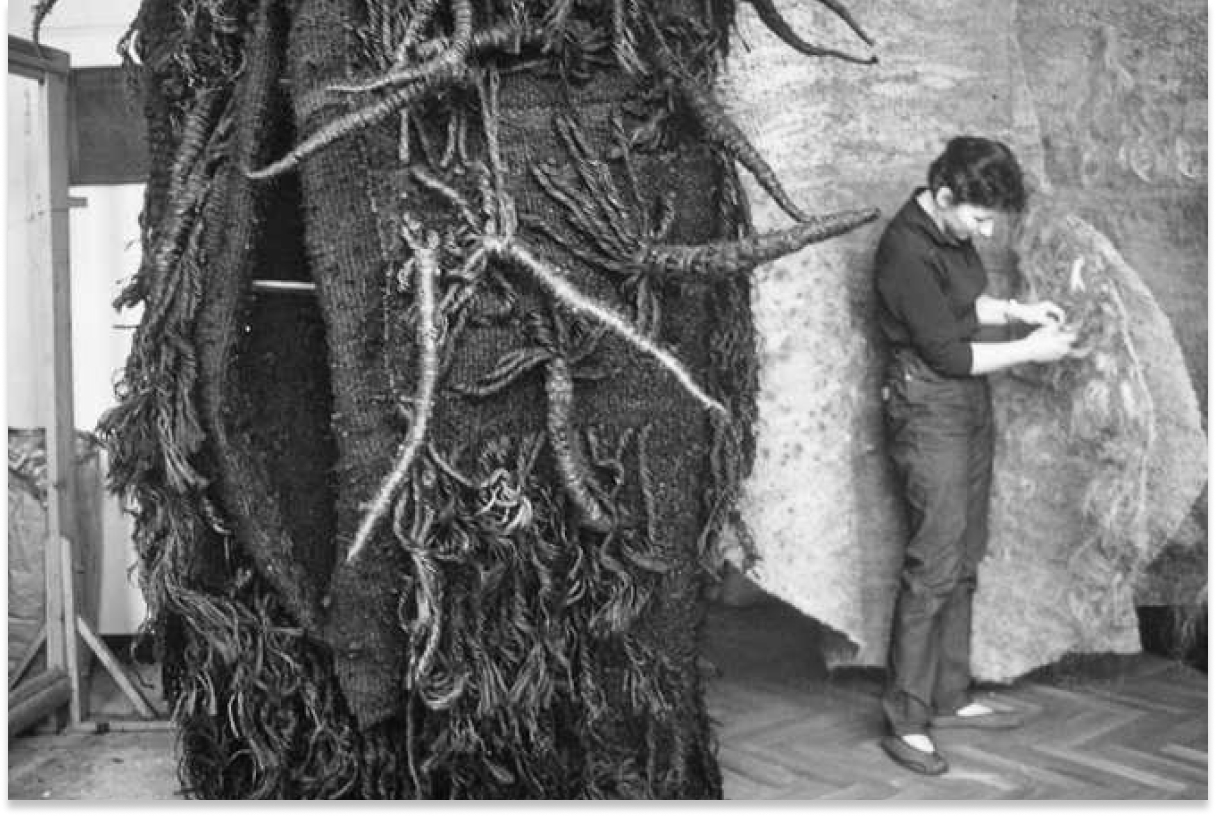
Abakanowicz begins to find her own artistic language. As she resists pre-defined categories of tapestry, textile, craft, decorative art or fine art, a new genre is named for her: ‘Abakans’. She becomes recognised for her efforts and exhibits throughout Poland and internationally.
ART
INSTALLA-
TIONS
She was one of the first artists to create what she called ‘spaces to experience.’ This was a new type of artwork when there was no word for installation or immersive art. When, for example, her textile works came off the wall and moved into the three-dimensional space, it was a radical new approach. Her ambitious experiment with scale and materials had not been attempted before, and this exhibition is a rare chance to see many of these works hung together.
2017
Abakanowicz dies in Warsaw, Poland on 20 April 2017. She is buried in the Powązki Cemetery, the oldest in the city.
The Abakanowicz Arts and Culture Charitable Foundation, established by the artist and her husband Jan Kosmowski twenty years earlier, begins to award grants. It supports scholarly work on the artist and legacy projects which sustain her belief in the dynamic force of art in society.

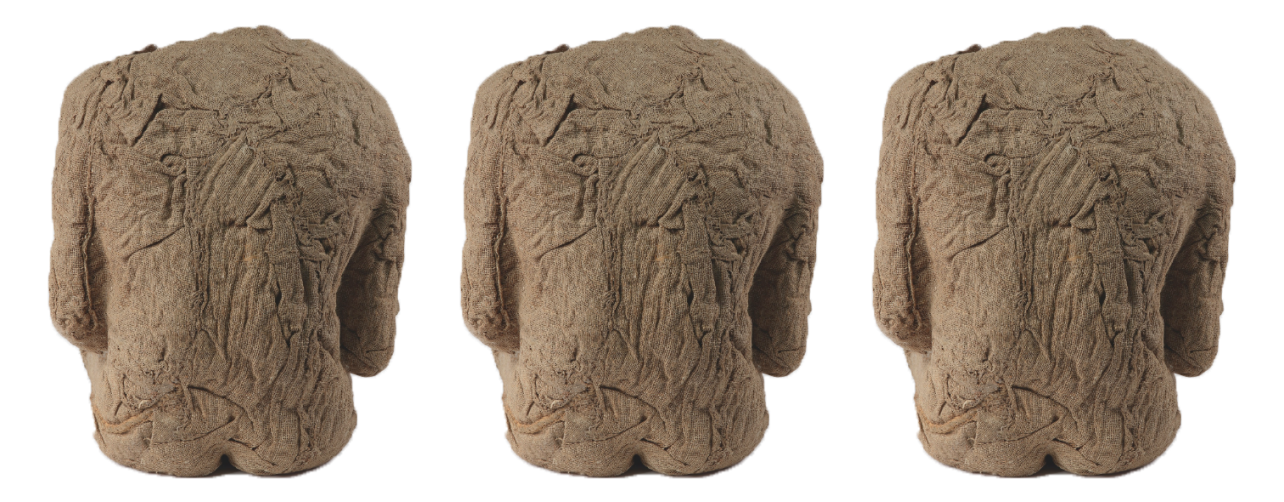
Exhibition view of Polish Pavilion, Venice Biennial 1980, showing artist with Backs 1976–9. Photo © Artur Starewicz (1980)
hronology of art 1970 – 1998
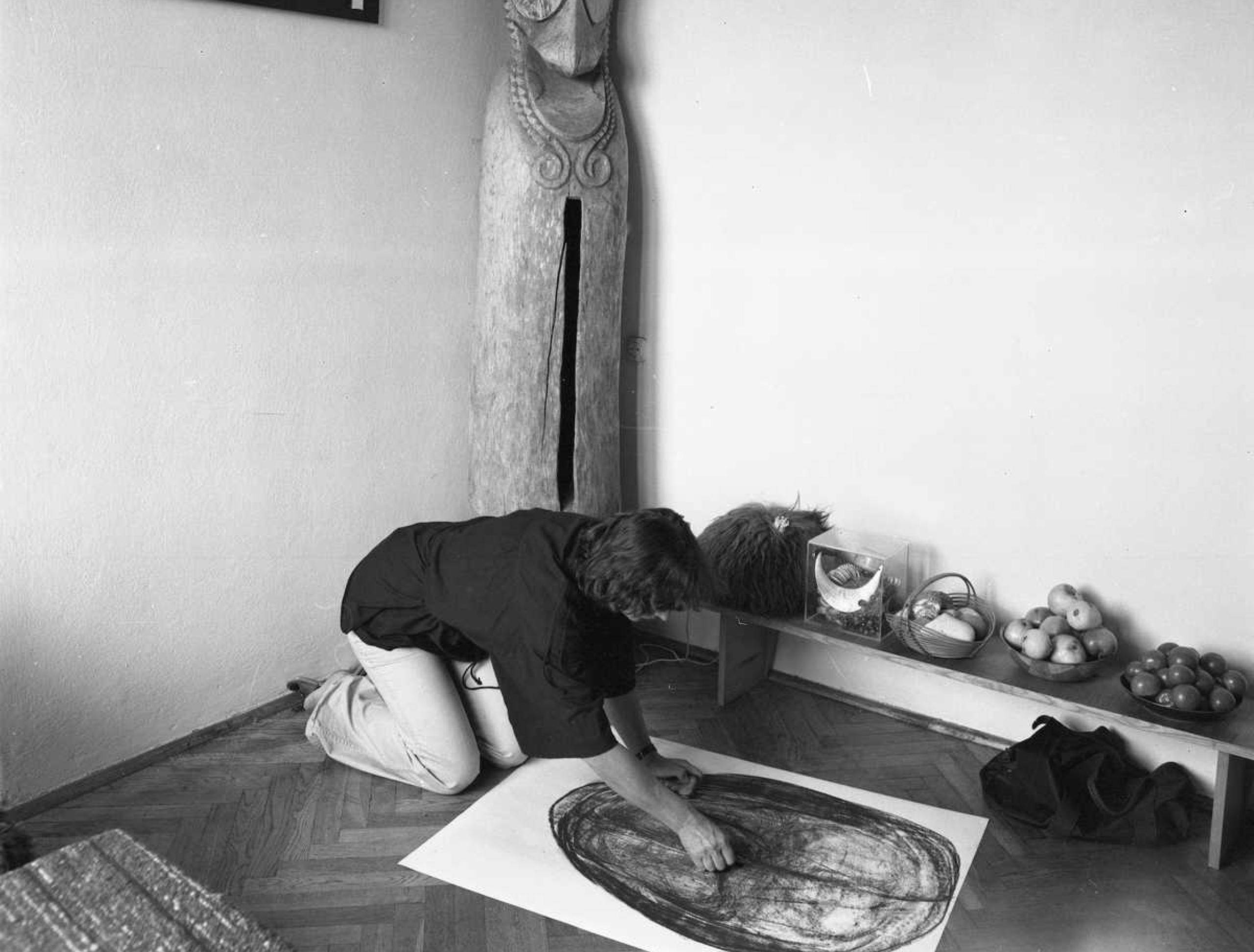
The artist in her home, 1981 / Artwork / Fundacja Marty Magdaleny Abakanowicz
In her late career 1985 – 2019
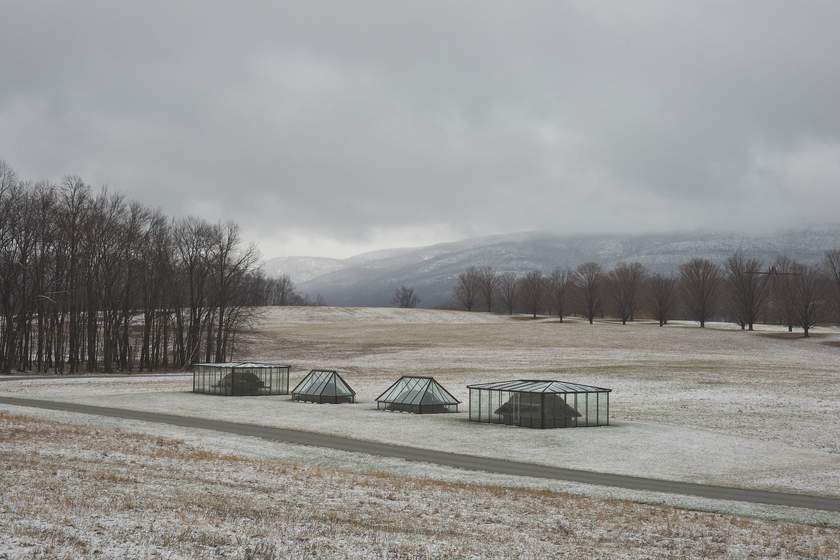
01 – Sarcophagi in Glass Houses
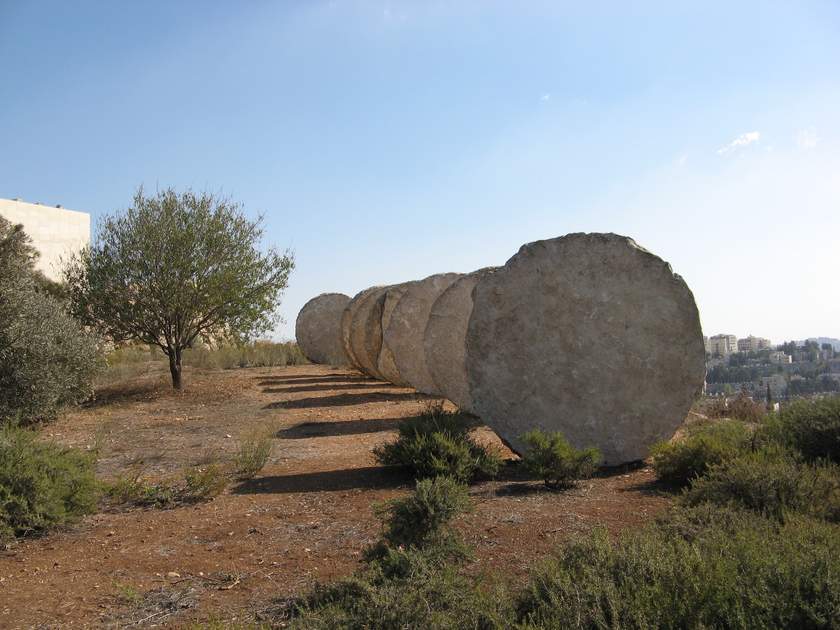
02 – neveg
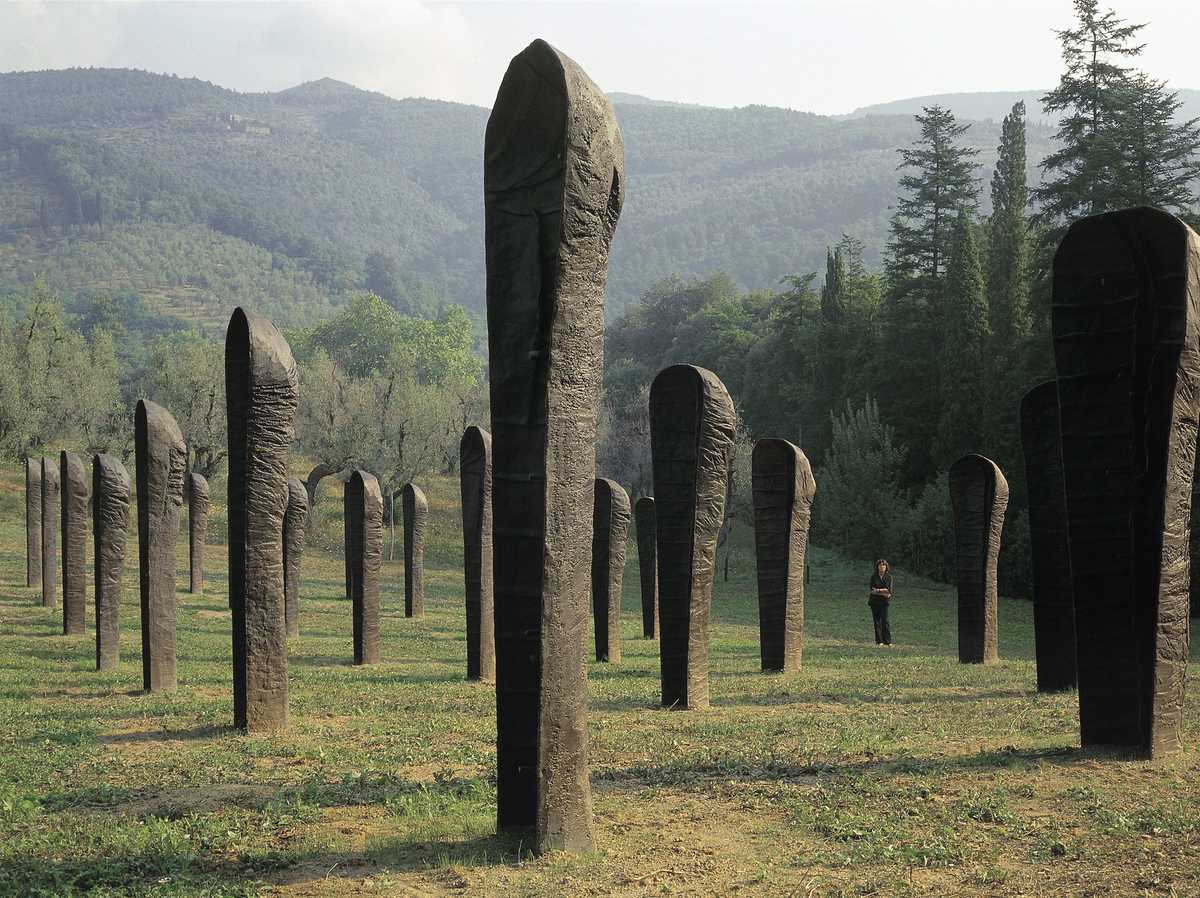
03 – Katarsis
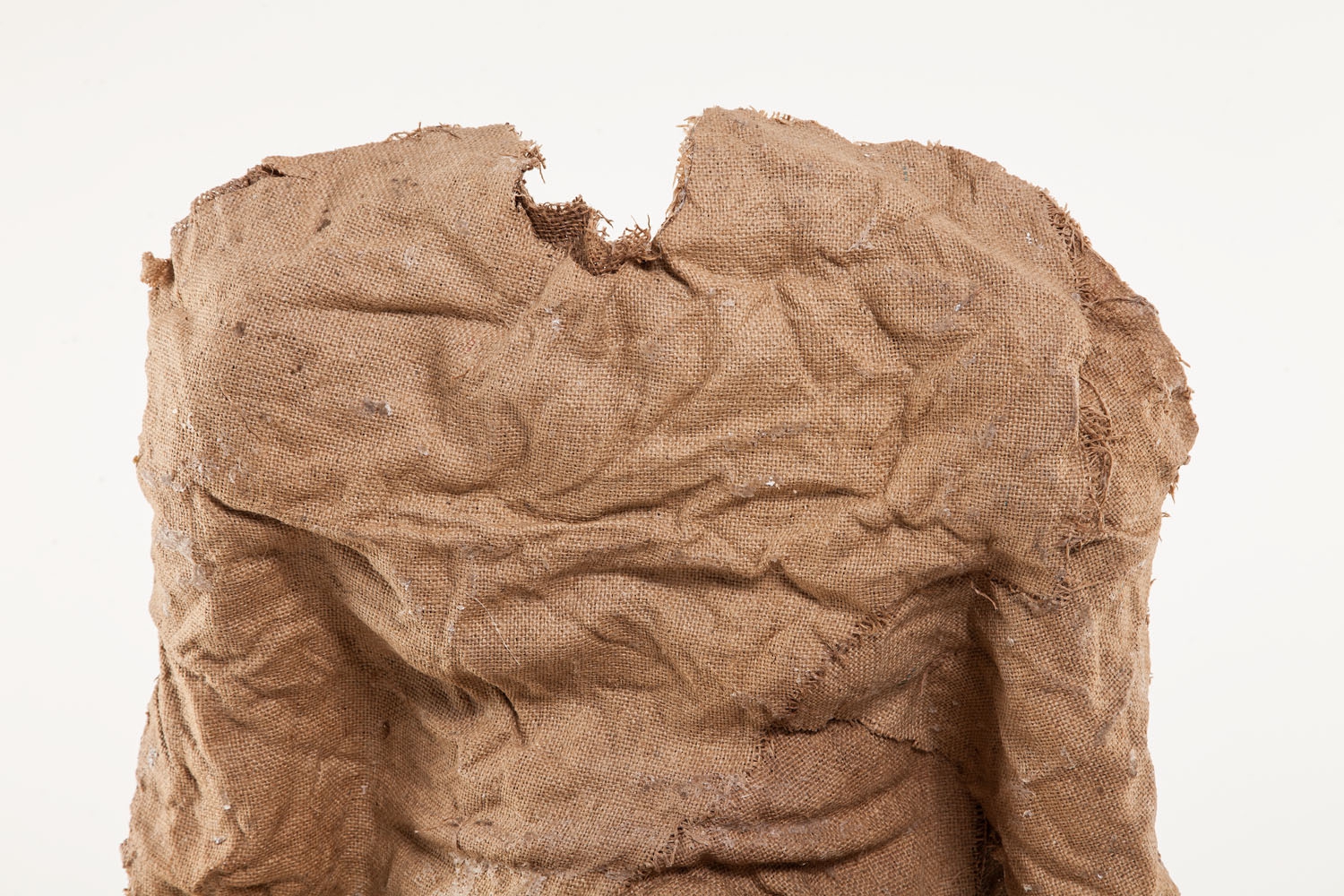
04 - GRUBY
Sculptor of

01 – FLOWERS / 1999

02 – FACES WHICH ARE NOT PORTRAITS


04 – BIRDS CYCLE / 1957

07 – WIND
My gouaches were as large as the wall permitted. Depressed by years of study, I was fighting back by making my gouaches for myself. For so long it had been repeated that I could not do it; my response had to be on a big scale. I wanted to take a walk among imaginary plants.

09 – EYE
I liked to draw, seeking the form by placing lines, one next to the other. The professor would come with an eraser in his hand and rub out every unnecessary line on my drawing, leaving a thin, dry contour. I hated him for it.

12 – From the Katharsis cycle / 1985

03 – EYE
I liked to draw, seeking the form by placing lines, one next to the other. The professor would come with an eraser in his hand and rub out every unnecessary line on my drawing, leaving a thin, dry contour. I hated him for it.

05 – CHARCOAL DRAWING

06 – SELF-PORTRAIT / 1991
%201.jpg)
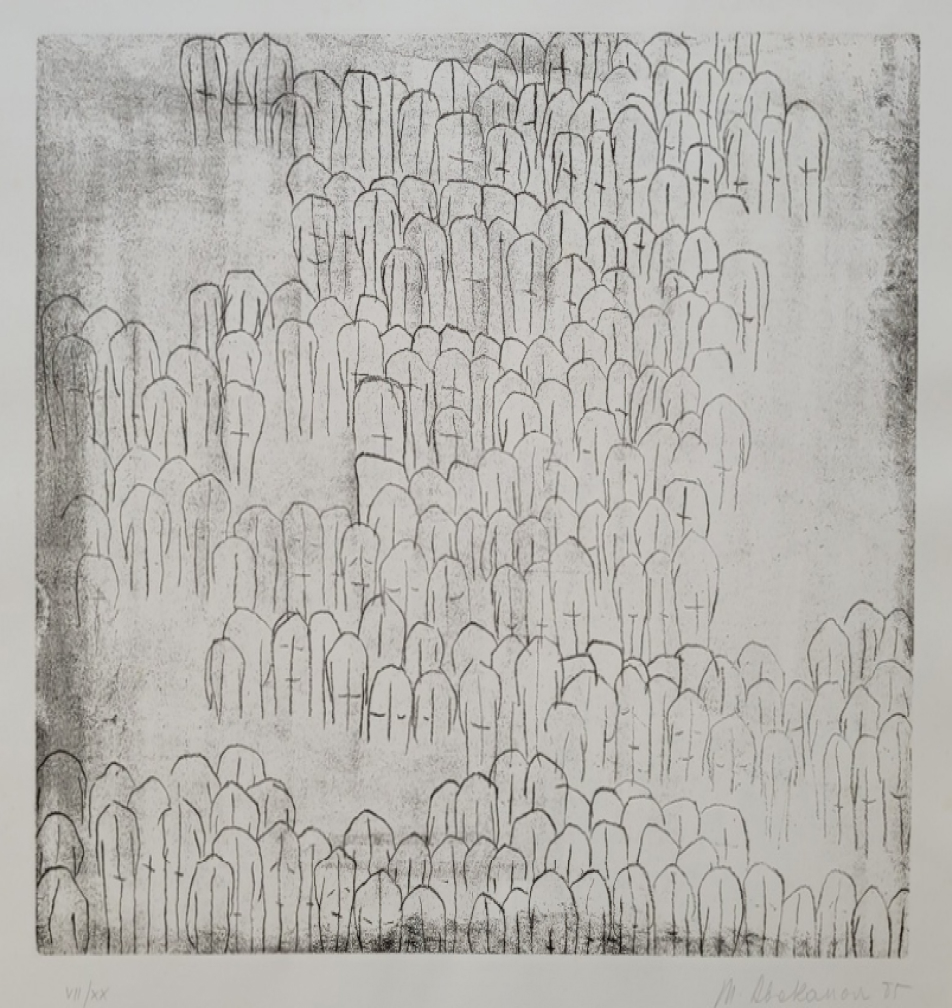
08 – From the Katharsis cyclE / 1985

10 – Asidum Folikum Flower / 1999

11 – Flower / 1999
backs